
Pre-seed, seed and Series A: funding stages explained
By TechAngels · Published 17 July 2026
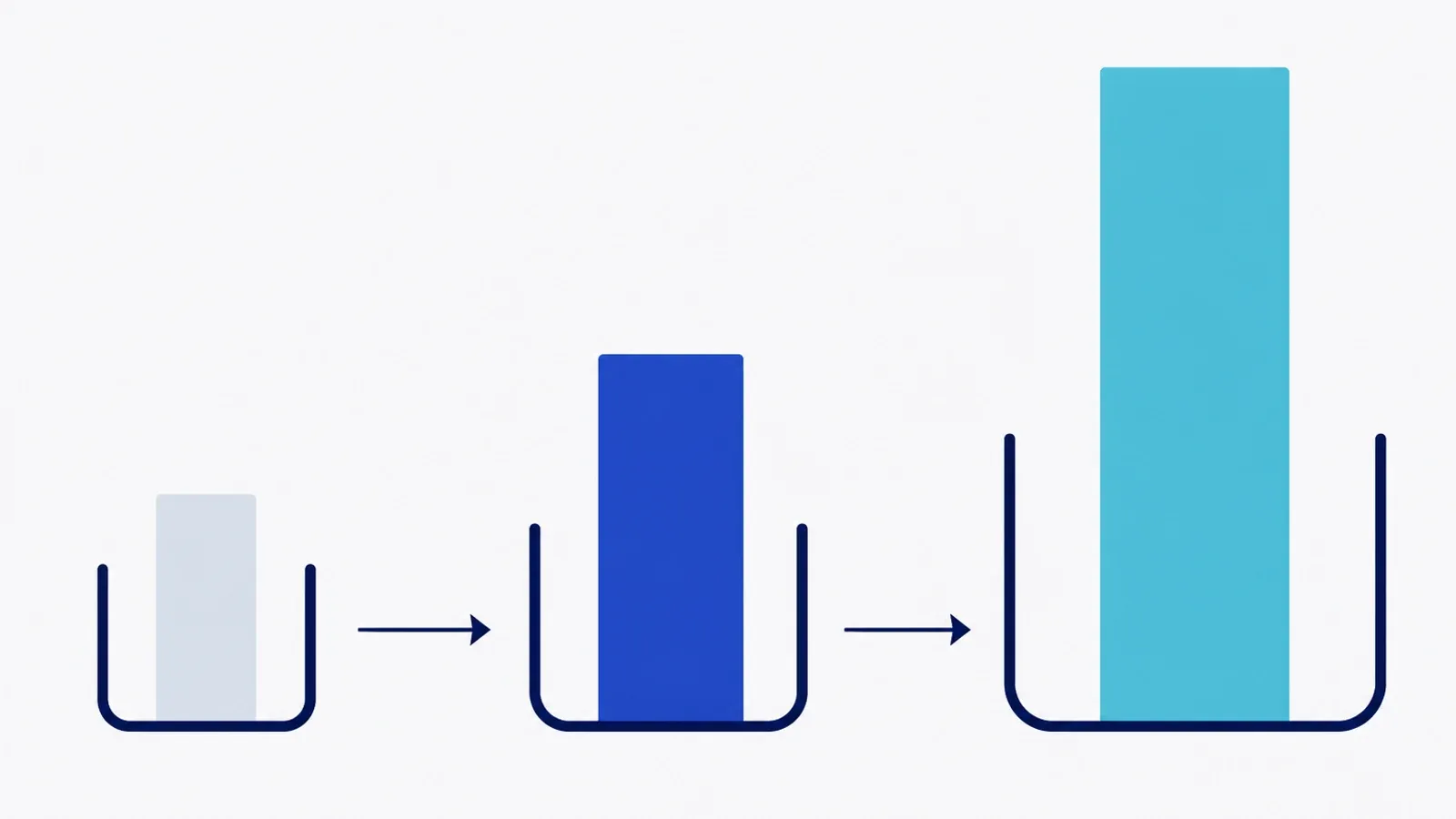
Pre-seed, seed and Series A are market labels for a company’s financing maturity. They are not regulated categories, and investors do not use them consistently. A €1 million round can be called seed in one market and Series A in another.
The label is still useful if it answers two questions: what has the company proved, and what will the new money prove next?
A practical comparison
| Stage | Evidence already available | Main job of the round | Common investors |
|---|---|---|---|
| Pre-seed | Founding team, problem knowledge, prototype and early user evidence | Build a usable product and test whether a defined customer wants it | Founders, people close to the founders, accelerators and angels |
| Seed | Product in use, early retention or revenue, initial route to customers | Improve the product, hire selectively and make demand repeatable | Angels, micro-VCs and early-stage funds |
| Series A | Sustained growth evidence, retention, clearer unit economics and a repeatable acquisition model | Scale sales, product and market reach | Usually a venture fund, with earlier investors sometimes following on |
This is a diagnostic table, not a checklist that every company must satisfy. Enterprise software, biotechnology, marketplaces and hardware produce different evidence at different speeds.
Pre-seed: prove that the problem deserves a company
A pre-seed company is usually too early to show a long revenue history. Investors instead examine the founders’ understanding of the problem, the quality of the prototype and the behaviour of the first users.
A waitlist is weak evidence on its own. A handful of users returning to a rough product, a paid design partnership or a customer willing to provide a reference is more informative. The best evidence depends on the product: a medical-device team cannot be judged by the same release cadence as a consumer application.
Pre-seed money should have a narrow job. It might fund the first production version, a regulatory step, ten credible customer deployments or enough usage to measure retention. “Grow the business” is not a milestone.
TechAngels considers pre-seed companies once they have at least a working prototype. That threshold is specific to the network’s investment criteria; some investors enter earlier and others later.
Seed: test whether demand can repeat
At seed, the product should exist outside the pitch deck. Investors will want to inspect who uses it, how customers arrive, whether they stay and, where revenue is relevant, whether they pay again.
The numbers need context. Fifty enterprise customers may be extraordinary or alarming depending on contract size, sales cycle and churn. Ten thousand consumer sign-ups mean little without activation and retention. A pipeline is not revenue, and a signed pilot is not the same as a renewed customer.
Seed capital commonly pays for work that turns an early signal into a repeatable process: product improvements, the first key hires, a measured acquisition channel or expansion within a clearly defined segment. Angels may invest again at seed, often alongside an early-stage fund.
Series A: show that additional capital can accelerate growth
Series A is normally led by a venture fund, although there are exceptions. By this point the discussion has moved from “Does anyone want this?” toward “Can this company acquire and retain customers efficiently at a much larger scale?”
Investors commonly examine revenue quality, cohort retention, gross margin, customer concentration, sales efficiency and the durability of the company’s advantage. Not every Series A company has settled product-market fit, but a company still searching for its first repeatable customer segment is unlikely to be treated as Series A merely because it wants a larger round.
The round is usually priced and documented through a formal term sheet. Earlier angels may participate to maintain part of their ownership, but a venture fund normally provides the lead, governance structure and most of the capital.
Diagnose your stage without relying on the amount
Write down the strongest evidence an investor can verify today:
- If it is mainly the founders, their insight and a prototype, the company is probably pre-seed.
- If it is real product usage, initial revenue or retention and an emerging acquisition channel, it is probably seed.
- If it is sustained growth with evidence that the economics remain workable as spending increases, it may be ready for Series A.
Then write down what the proposed round changes. The answer should be measurable and should reduce a specific risk. Pre-seed capital may reduce product risk; seed capital may reduce market and distribution risk; Series A capital is generally expected to scale a model that is already supported by evidence.
Do not choose a stage because its typical valuation sounds attractive. An investor will reconstruct the company’s maturity from the data room, customer calls and product demonstration. A mismatched label wastes time and can make otherwise sound evidence look less credible.
Romanian and CEE round sizes vary substantially by sector, year and investor. For that reason, this article does not assign a supposedly universal euro range to each stage. Founders raising from angels can compare their evidence with the TechAngels criteria and place the round within the wider Romanian funding landscape.